support@blog.viblea.com

Find The Best Meditation Posture For Your Practice

Relax, Breathe, and Find Balance Through Meditation
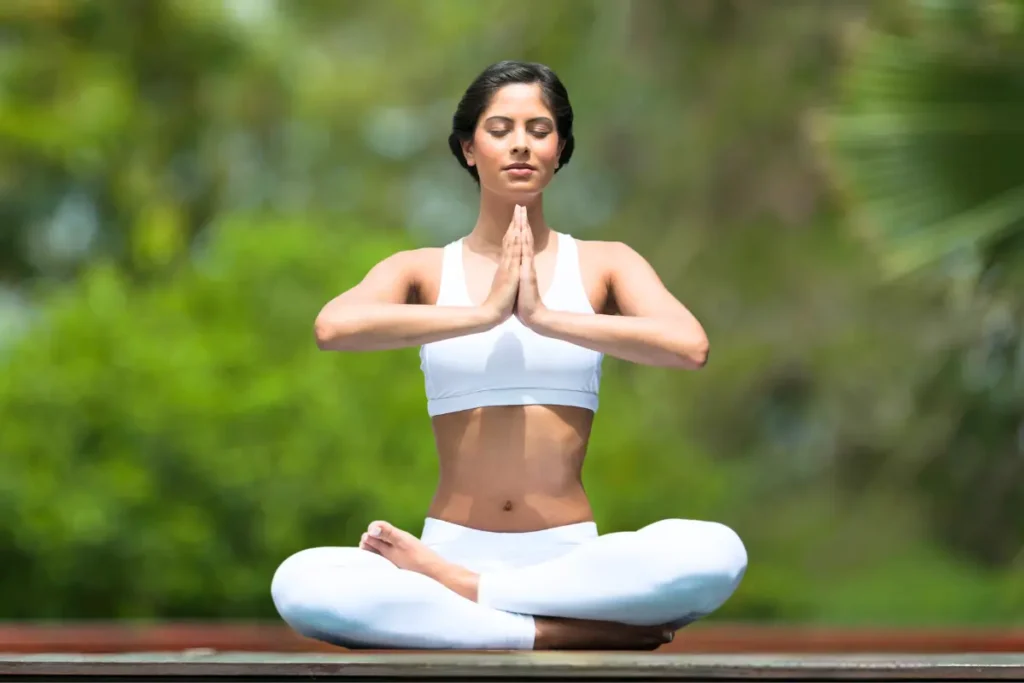
Meditation is a transformative practice that improves mental clarity, reduces stress, and promotes emotional balance. For beginners, choosing the right posture can enhance these benefits, making your practice more comfortable and effective. Check out the eight most effective meditation poses, with step-by-step instructions, to help you live a healthier life while overcoming stress and anxiety.
Meditation for Anxiety – Yoga With Adriene
Easy Meditation Poses for Beginners
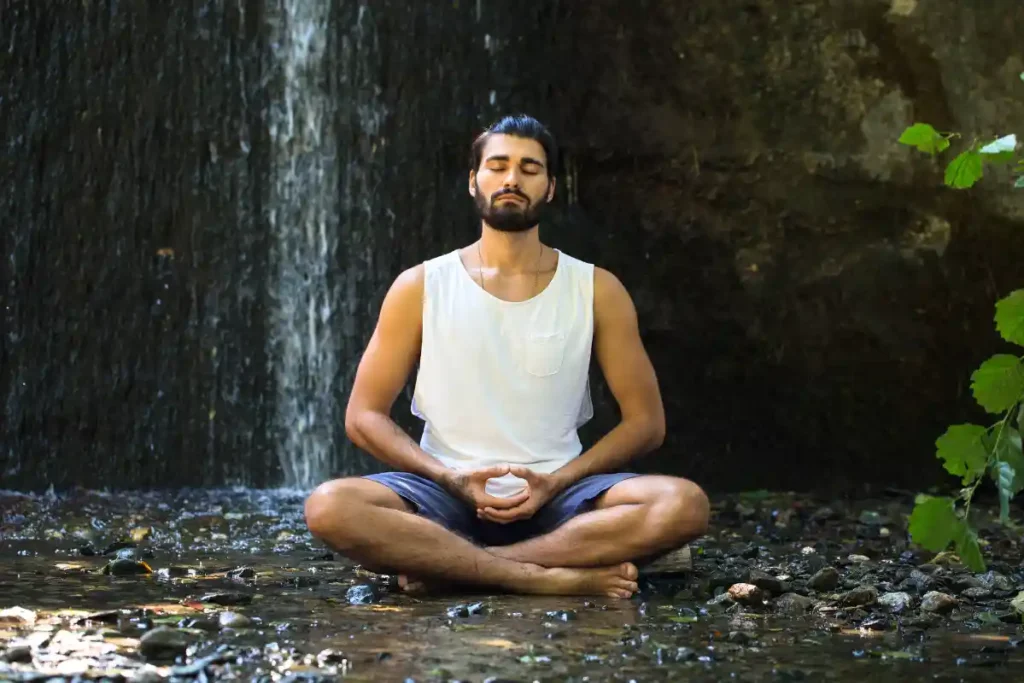
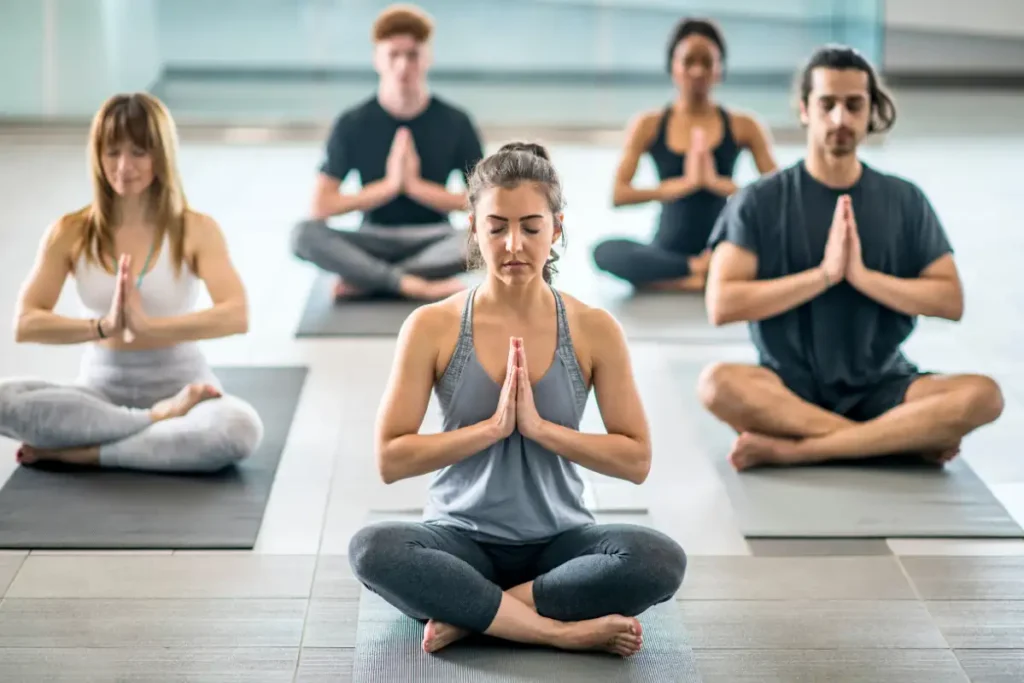
1. Sukhasana (Easy Pose)
Description: A simple and welcoming pose, ideal for relaxing and aligning the spine during meditation.
How to Do It:
- Sit on a mat or cushion to elevate your hips and avoid discomfort.
- Cross your legs naturally, allowing your knees to fall gently.
- Keep your spine straight, relaxed, and place your hands on your knees or lap.
- Close your eyes, breathe deeply, and focus on the rhythm of your breath.
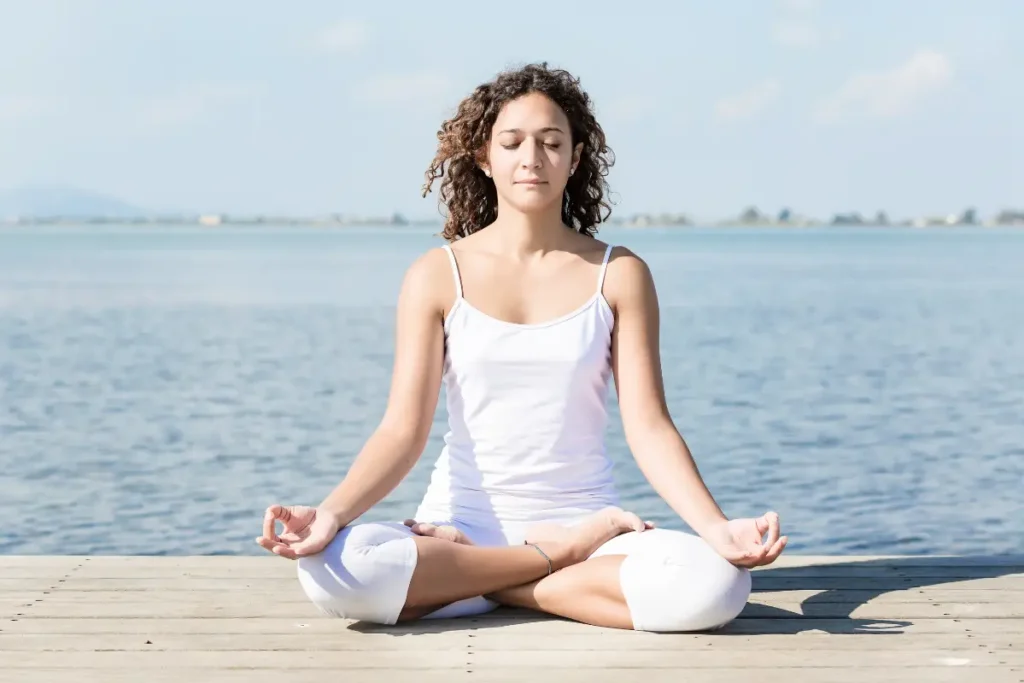
2. Padmasana (Lotus Pose)
Description: A classic pose that enhances concentration and deep breathing, though it requires more flexibility.
How to Do It:
- Sit with your spine straight on a comfortable surface.
- Bend your right leg and place your foot on your left thigh with the sole facing up.
- Bend your left leg and rest the foot on your right thigh, adjusting so your knees are close to the ground.
- Rest your hands on your knees or form a mudra (gesture for meditation) and maintain a serene gaze, focusing on your breath. Note: If you’re a beginner or feel discomfort, try Half Lotus (Ardha Padmasana).
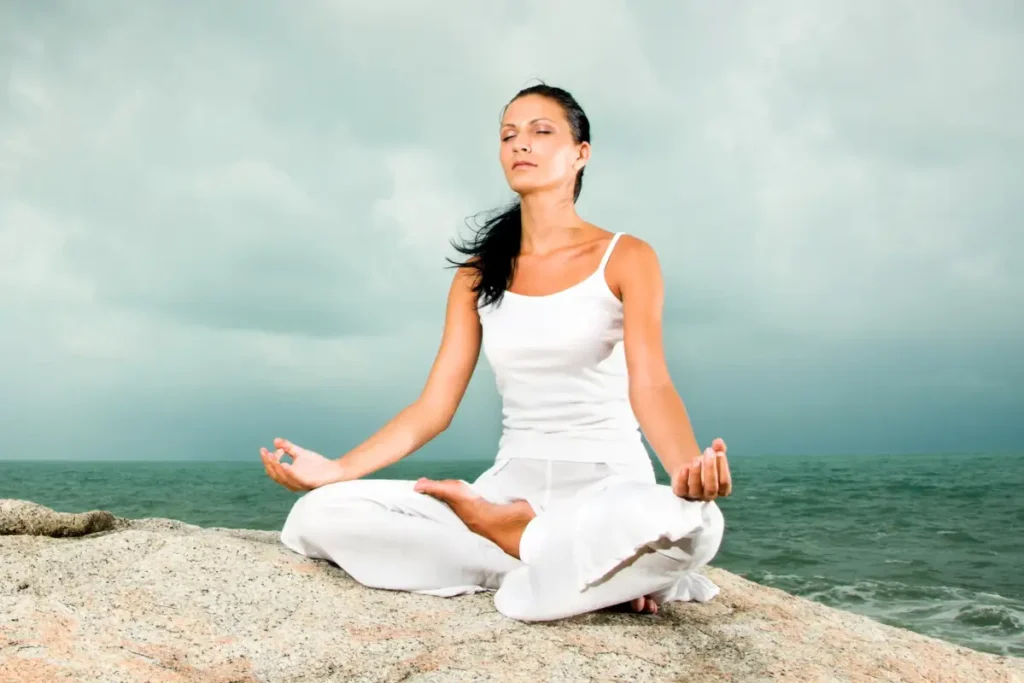
3. Ardha Padmasana (Half Lotus Pose)
Description: A variation of the Lotus pose that offers the benefits with less flexibility required.
How to Do It:
- Sit with your legs crossed in a comfortable position.
- Bend one leg and place the foot on the opposite thigh, keeping the other leg crossed naturally.
- Keep your spine straight, relax your shoulders, and rest your hands on your knees.
- Focus on your breath and feel the balance provided by the posture. Tip: Alternate the bent leg to balance the practice.
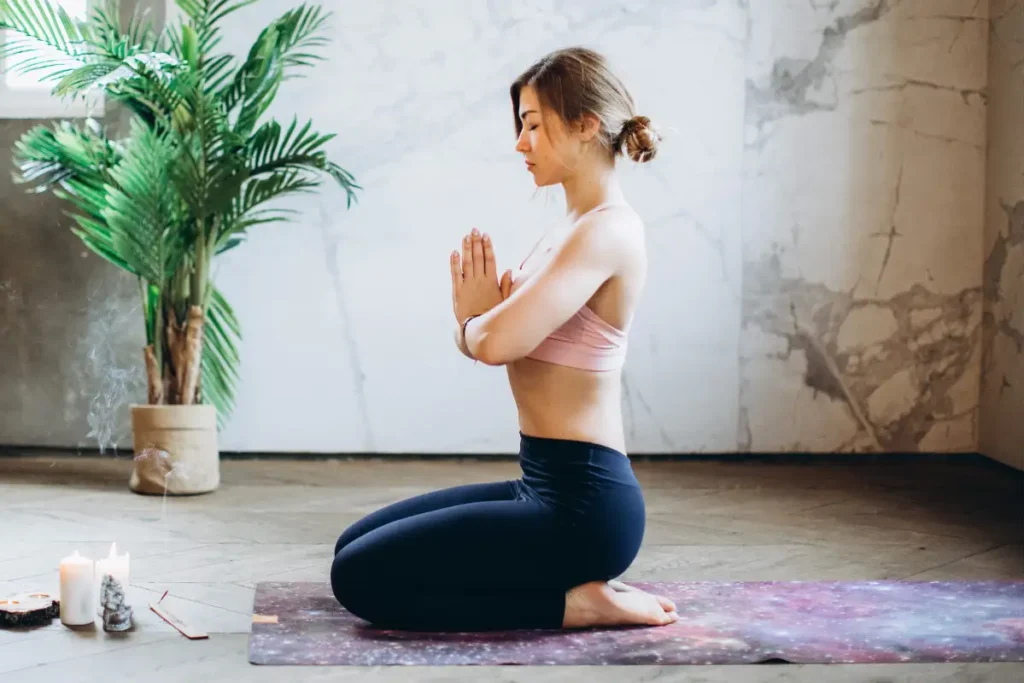
4. Vajrasana (Thunderbolt Pose)
Description: Known as the “diamond pose,” this position is excellent for maintaining a prolonged meditation with comfort and alignment.
How to Do It:
- Kneel on the mat with your knees together and feet aligned.
- Join the toes and gently sit on your heels.
- Keep your spine straight and place your hands on your thighs.
- Breathe slowly, feeling the stability and connection with the ground. Benefit: In addition to improving posture, it helps with digestion and relaxes the nervous system.
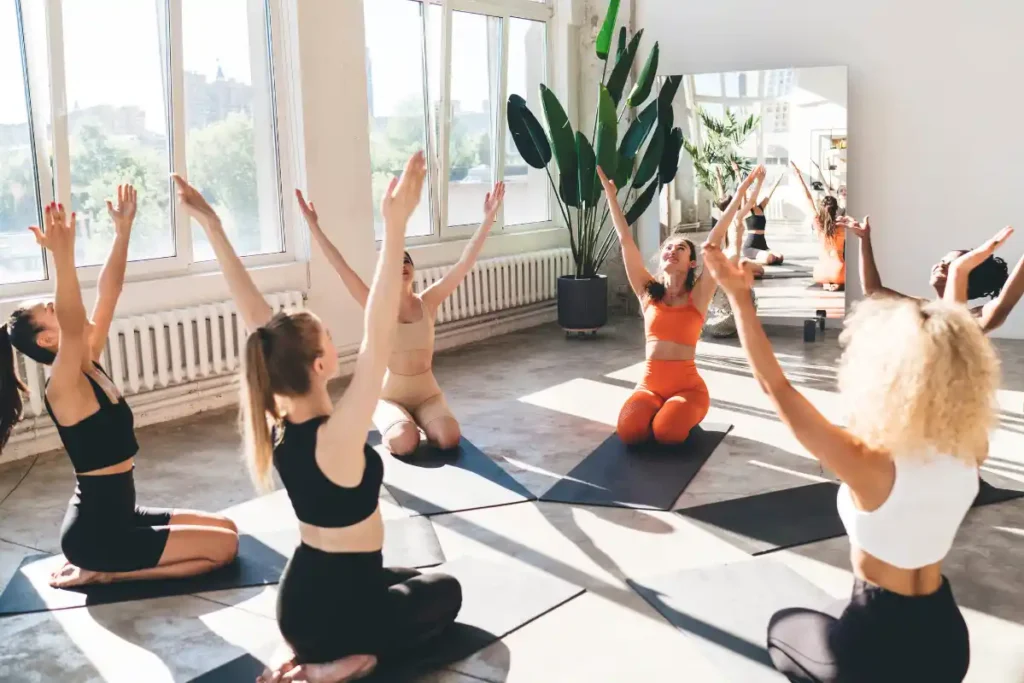
5. Seiza (Kneeling Pose with Cushion)
Description: A kneeling pose that, with a cushion support, offers comfort and stability for long meditation periods.
How to Do It:
- Kneel on a mat, keeping your knees hip-width apart.
- Sit gently on your heels; if discomfort arises, place a folded cushion or blanket between your ankles and heels.
- Keep your spine straight and your hands resting on your thighs or lap.
- Breathe deeply, allowing your body to relax with each exhale. Note: This posture is especially useful for those who find it difficult to sit on the floor.
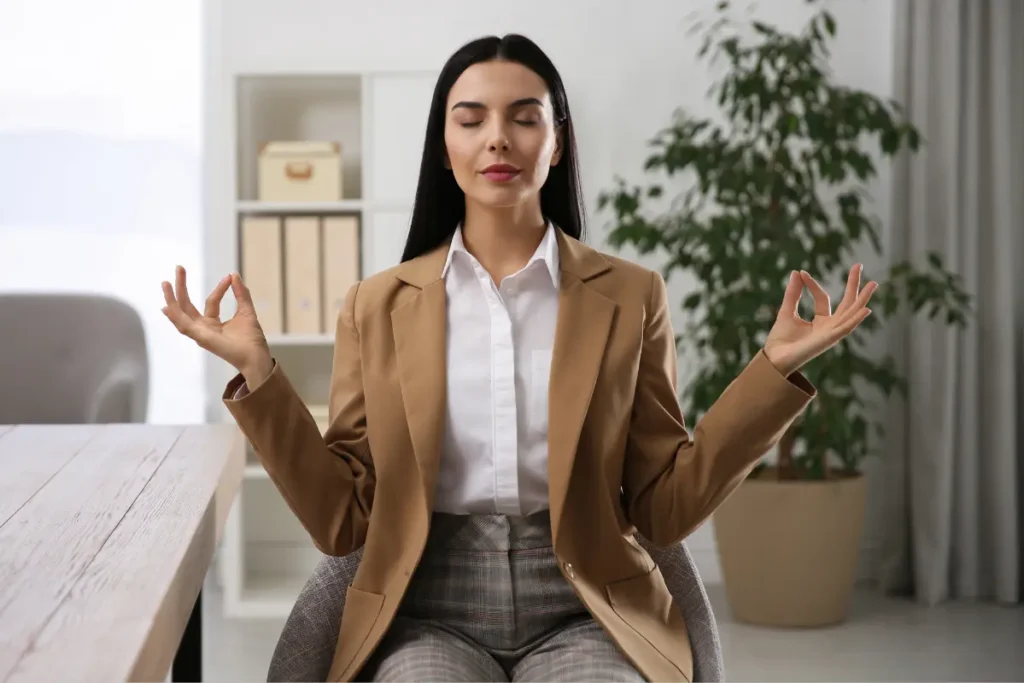
6. Chair Meditation
Description: An effective alternative for those unable to sit on the floor, using a chair to maintain proper posture.
How to Do It:
- Sit in a chair with a firm backrest, keeping your feet flat on the ground.
- Avoid leaning back too much; keep your spine straight and shoulders relaxed.
- Place your hands on your thighs or lap.
- Close your eyes and focus on your breath, maintaining stability and posture. Tip: This option allows accessible meditation practice without compromising posture alignment.
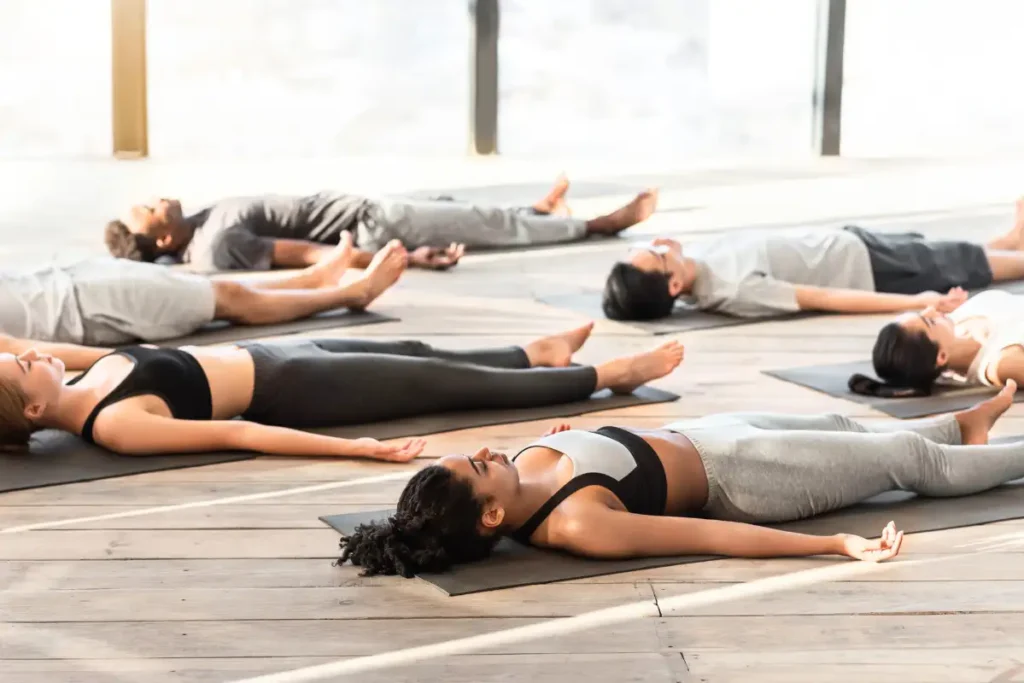
7. Shavasana (Corpse Pose)
Description: A deep relaxation pose, ideal for finishing your practice and integrating the benefits of meditation.
How to Do It:
- Lie on your back on a comfortable mat or surface.
- Keep your legs apart and arms resting by your sides, palms facing up.
- Close your eyes and let your body fully relax, releasing any tension.
- Focus on your breath, allowing each exhale to deepen the relaxation. Note: Stay in this position for a few minutes to maximize restorative effects.
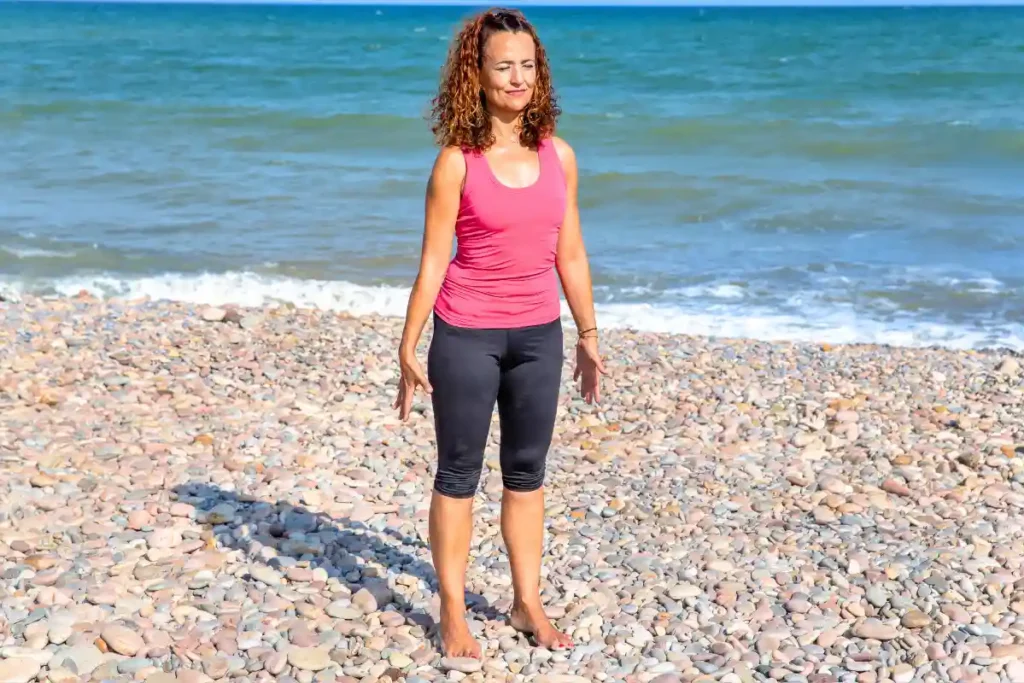
8. Standing Meditation (Tadasana – Mountain Pose)
Description: A standing meditation pose that promotes grounding and stability, ideal for moments when sitting isn’t feasible.
How to Do It:
- Stand with your feet firmly planted on the ground, aligning them hip-width apart or together.
- Keep your spine straight, shoulders relaxed, and arms at your sides or lightly crossed in front of your chest.
- Focus your gaze on a fixed point ahead to help with concentration.
- Breathe deeply and steadily, feeling the energy rise from the soles of your feet to the top of your head. Tip: This posture can also be practiced during a walking meditation, maintaining mindfulness in each step.
General Tips for Effective Meditation
- Posture: Keep your spine straight to facilitate breathing and enhance concentration.
- Breathing: Focus on deep, rhythmic inhalations and exhalations.
- Environment: Choose a quiet, comfortable place free from distractions.
- Consistency: Start with short sessions and gradually increase the meditation time.
- Mindfulness: Be present in each movement and breath, allowing your mind to calm down.
Choose the pose that best suits your body and experience. With regular practice, you’ll notice significant improvements in your physical and mental well-being. Try each one and discover which resonates with you the most!
Conclusion
Meditation can be highly beneficial for both the body and mind, offering improvements in mental clarity, stress reduction, emotional balance, and even better sleep and relaxation. By choosing the posture that best suits your body and level of experience, you can enhance the benefits of meditation, making the practice more comfortable and effective. Try different positions and discover which one fits best into your routine, promoting overall physical and mental well-being over time.